
CAM reconciliation software for commercial real estate
Kardin automates CAM reconciliation for commercial property portfolios: expense pools, caps, base years, gross-ups, and tenant statements, all in one budgeting platform.
What does Kardin automate in the CAM reconciliation process?
Kardin is CRE budgeting and reforecasting software that automates CAM reconciliation for commercial property portfolios. Expense pools, caps, base years, pro-rata shares, and occupancy-based gross-up calculations are set up once and roll forward automatically from budget to reforecast.
At year end, the reconciliation is reduced to three tasks: import twelve months of actuals, audit the rent roll, and confirm the recoveries billed to tenants. Kardin calculates each tenant’s over- or under-billing and produces auditable tenant statements that export to any accounting system, including Yardi, MRI, and RealPage, for final billing.
CAM recs in three steps
The reconciliation work happens during setup, once. Every budget season after that starts from what you already built.
Set up expense pools once
Import your rent roll and expenses, create expense pools, and attach them to tenants. Pools support caps, base years, manual adjustments, and dynamic gross-up calculations tied to occupancy. Reimbursement methods include triple net, fixed, and base year, with pro-rata shares you can adjust tenant by tenant. All of it rolls forward to the next cycle.
Reforecast as the year unfolds
One click rolls your budget into reforecast mode, where estimates are replaced with actuals monthly, quarterly, or annually. New actuals trigger dynamic recalculation of tenant-level recovery amounts, so you always know where every reconciliation stands before year end.
Reconcile, audit, and export
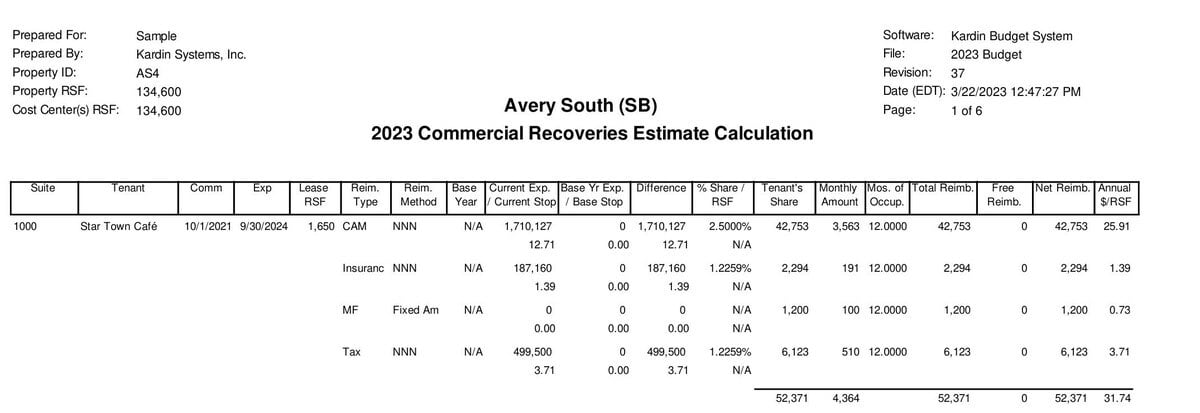
Import the full year of actuals and confirm amounts billed to tenants. The Recoveries Calculation report shows every tenant’s amount billed against amount due, backed by drill-down reports for caps, gross-ups, and leakage. Tenant statements and recovery amounts export from Kardin and feed into your accounting system.
Everything a CAM rec actually requires
Spreadsheets break where recoveries get complicated. These are the complications Kardin was built for.
Expense pools and schedules
Build pools by account or category, copy a new schedule from an existing one, and assign tenant-specific variations, like a renewal that omits a single expense, in minutes.
Caps and base years
Expense caps, base years, and base stops calculate into every tenant’s recoverable amount, with a Cap Calculation report showing exactly how each cap adjusted the net recovery.
Occupancy-based gross-ups
Simple, management fee, cleaning, and utilities gross-up methods tie to building occupancy and recalculate dynamically as estimates and actuals change.
Recoveries billed to tenants
Pull the amounts billed directly from your Kardin budget, import them from accounting by charge code, or enter them manually. What you confirm is what your reports show.
Retail recoveries
Denominator groups that set how average occupancy is calculated, anchor and non-anchor handling, admin fees on specific categories, and amortized capital projects, alongside office and industrial recoveries.
Leakage and audit reports
The Recoverable Operating Expense Leakage report shows what you aren’t recovering and why: vacancies, base years, or cap adjustments, so nothing slips through unexplained.
Every number, traceable to its source
The Recoveries Calculation report lays out each tenant’s reconciliation line by line: reimbursement method, base year, pro-rata share, months of occupancy, total reimbursement, and amount billed against amount due.
When something looks off, drill-down reports for cap calculations, gross-ups, and recoverable expense leakage show exactly where a number came from, before a tenant ever asks.
Works with any accounting system
Kardin sits alongside your accounting system, not in place of it. Chart of accounts, budgets, suites, tenants, and leases import from Yardi, MRI, RealPage, or any other accounting system. When the reconciliation is done, tenant-level recovery amounts and statements export back for final billing.
No rip-and-replace, no waiting on an ERP module. That’s what we mean by flexible by design.
See it with your dataCAM season shouldn’t mean rebuilding spreadsheets from scratch. Set up your recoveries once, and every year-end reconciliation starts nearly finished.

CAM reconciliation questions, answered
The questions property managers and asset managers ask most about reconciling recoveries in Kardin.
What is CAM reconciliation?
CAM reconciliation, which you may also hear called OpEx reconciliation, recoveries, or reimbursables, is the year-end process of comparing the common area maintenance charges you billed tenants during the year, based on budgeted expenses, against what the property actually spent. Tenants billed more than their share of actual expenses receive a credit; tenants billed less owe the difference.
Does Kardin automate CAM reconciliation for commercial property portfolios?
Yes. Kardin automates CAM reconciliation for commercial property portfolios. Expense pools, caps, base years, pro-rata shares, and occupancy-based gross-ups are set up once and roll forward from budget to reforecast. At year end you import twelve months of actuals and confirm recoveries billed to tenants; Kardin calculates each tenant’s over- or under-billing and produces auditable tenant statements that export to your accounting system for final billing.
Which accounting systems does Kardin work with?
Any of them. Kardin works alongside any accounting system, including Yardi, MRI, and RealPage. Chart of accounts, budgets, suites, tenants, and leases import into Kardin, and tenant-level recovery amounts and statements export back, so there is no rip-and-replace.
Can Kardin handle gross-ups, caps, and base years?
Yes. Kardin expense pools support expense caps, base years and base stops, manual expense adjustments, and dynamic gross-up calculations tied to building occupancy, including simple, management fee, cleaning, and utilities gross-up methods. Reimbursement methods include triple net, fixed, and base year, with a dynamic pro-rata share that can be adjusted tenant by tenant when a lease calls for it.
Does Kardin support retail recoveries?
Yes. Retail recoveries in Kardin support denominator groups that set how average occupancy is calculated, anchor and non-anchor tenant handling, admin fees on specific expense categories, and amortized capital projects, in addition to the commercial recovery features used for office and industrial portfolios.
Can Kardin do a partial-year or mid-year CAM reconciliation?
Yes. For properties acquired or sold mid-year, Kardin’s occupancy override treats the months you owned the asset as the full reconciliation period, so tenant recoveries calculate correctly on a partial year of actuals. Kardin also supports fiscal-year budgets alongside calendar-year reporting.
How does CAM reconciliation software reduce spreadsheet errors?
Spreadsheet reconciliations break because formulas, pro-rata shares, and cap logic get rebuilt by hand every year. Kardin replaces that with calculations that roll forward automatically: setup data carries from budget to reforecast, actuals import with validation against your chart of accounts, and drill-down reports, including Recoveries Calculation, Cap Calculation, and Recoverable Operating Expense Leakage, make every number traceable to its source.
Reconcile with confidence this year
See how quickly your portfolio’s CAM recs come together when the setup work is already done.